

1.
One of my more interesting translation jobs was a novel manuscript about King Kamehameha’s wife, Kaahumanu. The Japanese writer had published several nonfiction books that were well-received in Japan about Hawaiian culture. The author was particularly known for his work trying to uncover the secret grave of King Kamehameha, which was turned into a documentary on NHK.
He taught at a local university near where I lived in Japan and this was his first work of fiction. The book had not been published yet—or maybe it had been self-published, I can no longer recall. But the professor loved this project and wanted to see what his novel would feel like in English. If we hadn’t been interrupted by the Triple Disasters, we might have tried pursuing finding a place to publish it after we finished. I thought the book was fantastic, and I learned so much working on it.
I had an old writer friend who said that the best way to learn how to write a novel was to hand copy a work of fiction you admire. In the process, he said, you will learn all the tricks. I think translation does this and more; for what deeper dive into a book is there than translating it into your native language?
2
As an afterword, the professor wrote a long note about the deep connections he has found between Japan and Hawaii. He commented about the way Japanese people have always loved Hawaii, which I think is true, and his own belief was that Polynesian culture had a much larger impact on Japan, than has been accepted.
The origins of the Japanese culture and language are not that cut and dry, and a case could be made for a strong Polynesian influence. For example in linguistics, Japanese and Hawaiian share an open syllable system without final consonants (except “n”) and the easy pronunciation of vowel-consonant.
When I first started learning Japanese, I remember being told to pronounce it like Italian, but I think a case could have been made for Hawaiian or even Indonesian. There are long vowels — marked in Hawaiian with a kahakō (macron). Lacking the stresses of English, the professor mentioned how Japanese speakers learning Hawaiian find their mouths feeling strangely familiar.
In culture, he commented on the deep reverence for mountains and the land, which is also something shared by the Balinese who tend to “look away from the sea,” and a predilection to see the natural world as being animated. And there is such a strong respect for family and the elderly in both Hawaii and Japan, as well as a preference for the indirect, the communal, and the veneration of ancestors.
3
I have been coming to Hawaii since I was a child because I have family on Oahu. My favorite auntie lived there, and we would visit every year. I fell madly in love with the place. And even in grammar school, I remember how totally overwhelmed I was by the fragrance of the flowers and the way the salty air felt on my skin. And the shining vibrant rainbow colors of the place.
So, I was not surprised that my son also fell in love with it. As a bi-racial half Japanese-half white kid, I think he must have felt so at home in a place like Hawaii, where the hapa culture is so vibrant. When people ask “what are you?” they are curious about heritage in a way that feels much more positive than anywhere I have been. I was not surprised he chose to move to Honolulu and study business at the University of Hawaii at Manoa. He works part-time at a Japanese hotel in Waikiki, staffing the front desk, getting to use his no-longer-fluent Japanese.
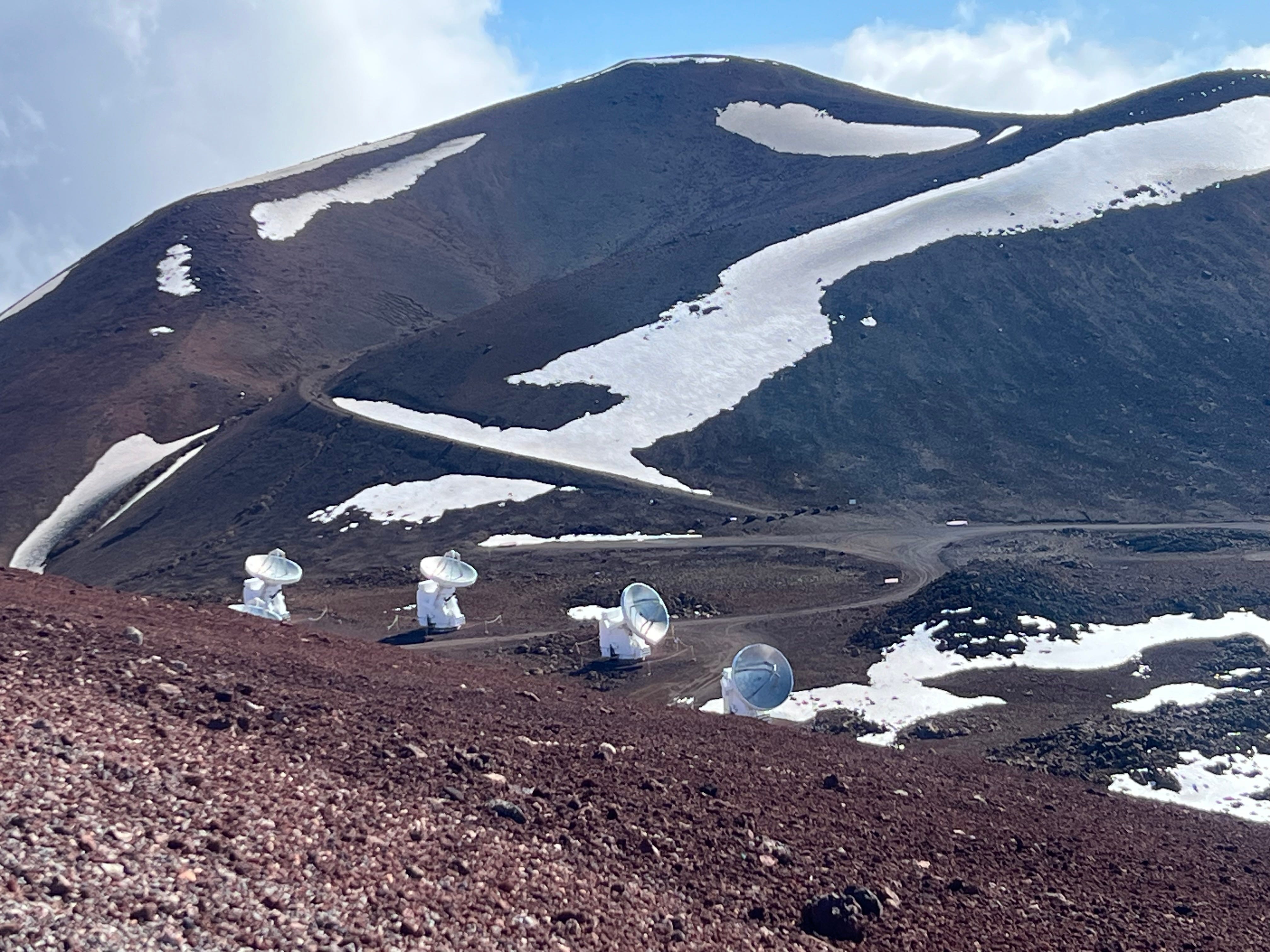
Since getting re-married, I’ve been traveling more to the Big Island. My husband is an astrophysicist and has an instrument on the Keck telescope here. He visits a lot, and I tag along whenever I can. The snow on the summit of Maunakea still astonishes me. And those shining black lava rocks — I find myself imagining the warriors from the professor's novel, who fought barefoot across their sharp slippery surface. And the volcanoes and black sand beaches and the waterfalls and the rainbows and flowering trees….
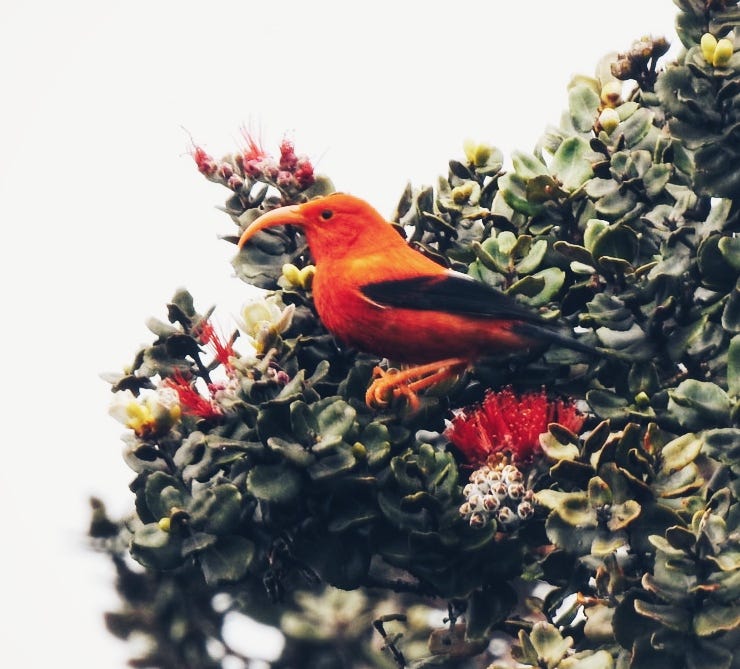
Whenever I see and hear a honeycreeper, I am transported into wonderland.
4.
Islands have always claimed me. My favorite places in the world — from Bali to Boracay, from Penang to Hong Kong — are all islands. And, of course, Japan is an island nation. None has captured my imagination more completely than Hawaii.
Yes, this is my short love letter to my favorite island.
5.
During covid, I kept thinking that if anything good could come out of the tragedy of all the suffering, it would be if Americans could do a big reset. Maybe start working together to consume less, pollute less, try and go a little lighter on the planet. Quiet down, maybe look back to a time when the turning of seasons was marked collectively, when certain days were set apart from other days, when the rhythms of a community’s life together created something like punctuation in time.
But before we knew it, we were back to business as usual. Or dare I say it, the spinning world was back with a vengeance!
I just finished Terry Tempest Williams’s new book called The Glorians: Visitations from the Holy Ordinary. The title is from a dream the author had during the early days of the pandemic. It is an extraordinary dream in which Williams finds herself at Harvard, where she is a writer-in-residence in real life, and in the dream she is climbing a tower. Reaching the top, she sees a female colleague, whom she then approaches.
“Do you remember the vow you made to us?” the colleague asks.
“Remind me,” Williams says.
“Your vow is to create the Epic Documentation of the Glorians,” the colleague says.
And with that the author wakes up. But wait, what is a Glorian?
For Williams, the pandemic was a “great quieting.” This terrifying time when the world grew quiet around us. That was how it was for me in Pasadena. It’s hard to believe but that was the first time I ever heard the sound of baby birds singing in a nest. They were baby juncos and sounded like chirping crickets.
Everything is so loud in Southern California. There are always planes streaking overhead and so many police helicopters. And the constant sound of leaf blowers and relentless construction noise. But during the pandemic, the world got so quiet, especially during the beginning of the lockdown. I remember being startled by a massive grapefruit falling off the tree and hitting the ground with a thud in our backyard. How had I never been present for that before?
For Terry Tempest Williams, her dream haunts her. What is a Glorian? No matter how hard she looks, she comes up empty. Until one day, while watching an ant carry a magenta flower from a blooming willow tree across a long stretch of her backyard, she is stunned by the magnificence of the world.
That is a Glorian, she decided.
And so she defines a Glorian as an encounter with élan vital — a meeting with grace. It is the “holy ordinary” of the book’s title, something I’ve always referred to as Wonderworld — from Melville’s “the great flood-gates of the wonder-world swung open” in Moby Dick.
6.
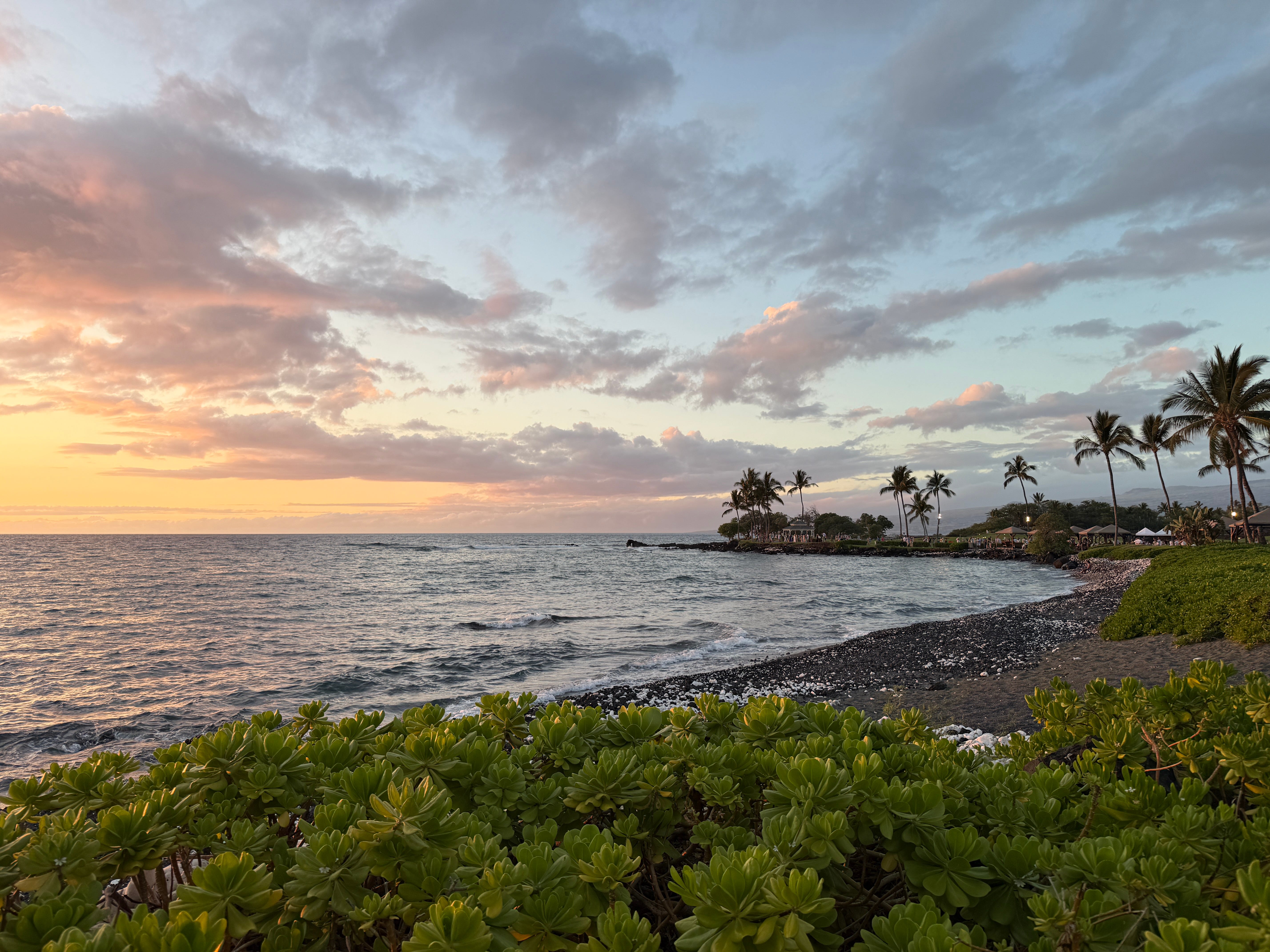
Every time I come to Hawaii, I feel like I’ve slipped sideways in time — back toward something I thought I’d left behind in Japan. It is probably the most remote place in the world. Where is the nearest landmass? California? Easter Island? Or is it Japan? Hawaii is truly in the middle of nowhere, and maybe that is why it has always felt like a time slip to come here.
Just sitting on the beach watching the world go by, I was thinking it was one of the first times in a really long time that I haven’t seen every single person around me on their phone. The people next to me today were reading real books. Kids were making sandcastles and people were in the water snorkeling. Families were everywhere. Something about this island still holds time differently.
And I felt it again. That door swinging open. The wonderworld, just on the other side of ordinary life. Still there. Waiting.


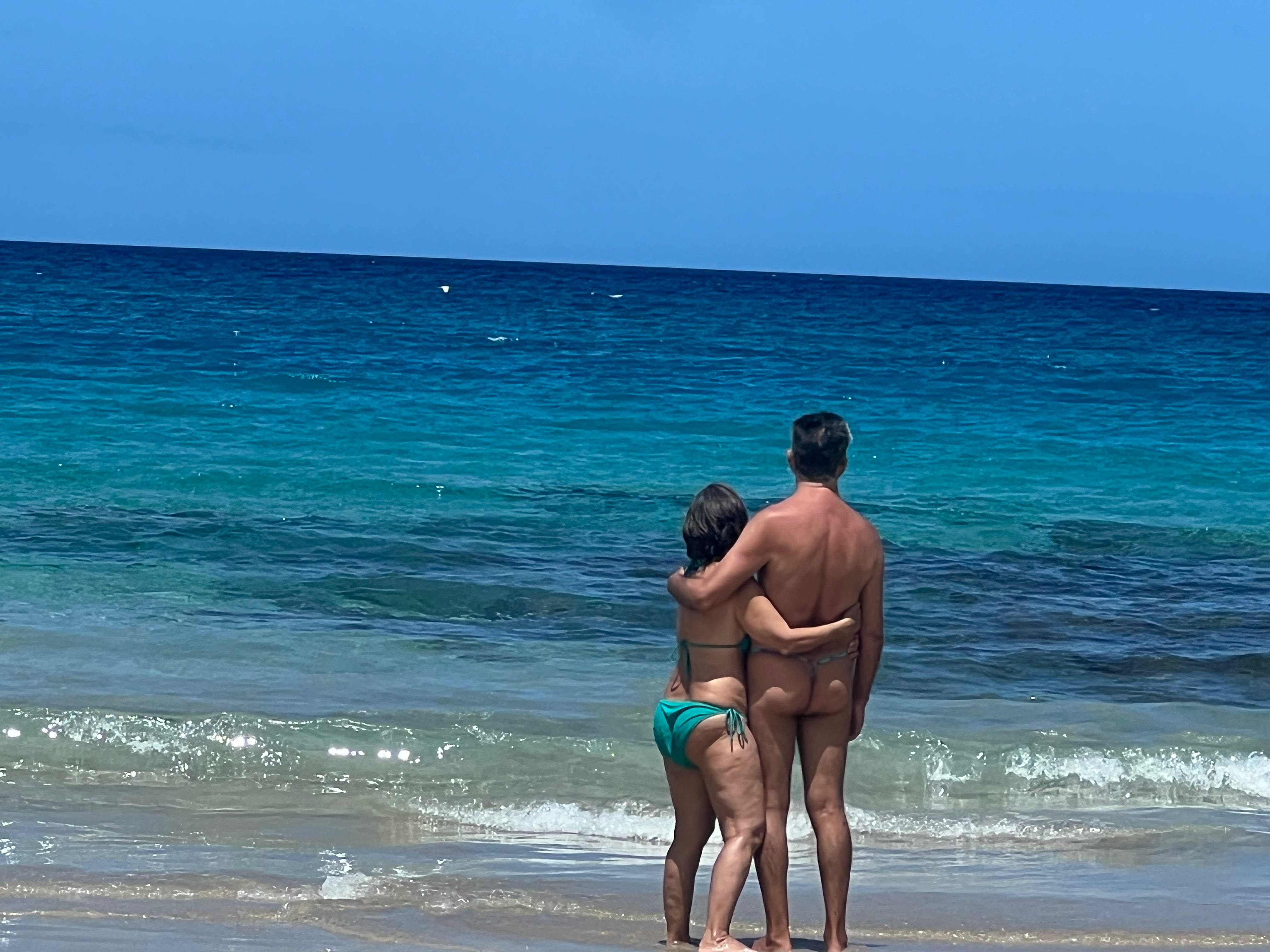
PS There was an older couple walking up the beach. The man in a thong loincloth —not even sure what to call it— and the lady in a string bikini. Such confidence!~ What is this place? Are we in the Garden of Eden? I am putting a picture below to celebrate them. The last time I was here I saw a couple of a similar age (maybe late 60s) emerge completely naked out of the water at the beach of a famous five star hotel I was passing through… the staff came running out to tell them it was not allowed… and again I could not imagine such joyous confidence! (I can remove this photo if anyone thinks it is not appropriate since I didn’t exactly have their permission!)
Absolutely beautiful! I was offended by the photo but ONLY because you called them an older couple and they look at least 20 years younger than me! Lovely writing, thank you.
Kaahumanu の翻訳プロジェクトという入り口が良かったです。私は東京の12階でハワイに行ったことがないのですが、王妃の名前が翻訳される時に何が抜け落ちるか、という問いは、私が普段「mottainai」で考えていることと同じ形をしている気がします。